The UAE’s position as a global trade, investment, and financial hub brings significant economic advantages—but it also exposes the country to complex cross-border financial crime risks. With high volumes of international transactions, diverse business structures, and multiple regulatory jurisdictions involved, AML/CFT Challenges in UAE are increasingly shaped by cross-border exposure.
As regulators intensify scrutiny and global cooperation increases, businesses operating in or through the UAE must understand how cross border trades impact Anti-money laundering UAE obligations and compliance expectations.
Understanding Cross-Border AML/CFT Challenges in UAE
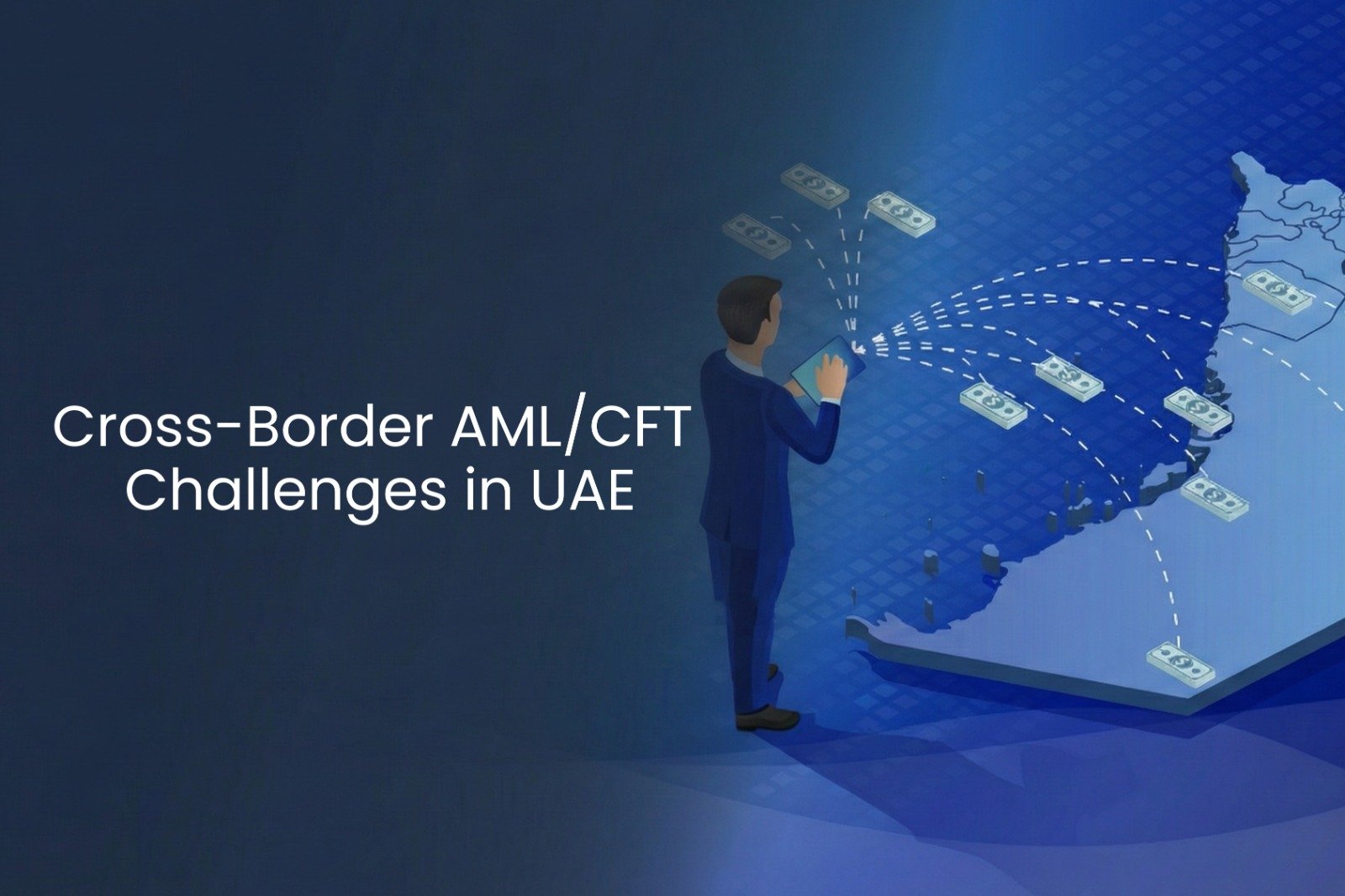
Cross-border AML/CFT risks arise when funds, customers, or transactions involve multiple jurisdictions, each with different regulatory standards, enforcement intensity, and transparency levels.
Key contributors to AML/CFT Challenges in UAE include:
- High international trade volumes
- Foreign ownership structures
- Cross-border remittances and payments
- Complex corporate vehicles and beneficial ownership layers
- Exposure to high-risk or sanctioned jurisdictions
These factors significantly complicate AML risk assessment in UAE efforts for financial institutions and DNFBPs alike.
UAE’s Position in Global Financial Crime Networks
The UAE occupies a strategic position in global financial and trade networks, acting as a gateway between Asia, Africa, Europe, and the Middle East. While this supports legitimate commerce, it also creates vulnerabilities that can be exploited for:
- Trade-based money laundering (TBML)
- Cross-border tax evasion
- Terrorist financing flows
- Sanctions circumvention through third countries
The UAE has strengthened its AML/CFT regime in response to international scrutiny, particularly following its engagement with the Financial Action Task Force (FATF). Regulatory reforms, enhanced supervision, and enforcement actions demonstrate the UAE’s commitment to aligning with global standards—but compliance expectations for businesses have increased substantially.
Cross-Border Transaction Monitoring Challenges
One of the most pressing AML/CFT Challenges in UAE is effective monitoring of international transactions.
Common difficulties include:
- Limited visibility into foreign counterparties
- Inconsistent data quality across jurisdictions
- Different customer identification standards
- Delayed access to foreign beneficial ownership information
Without robust transaction monitoring systems and risk-based controls, suspicious cross-border activity can go undetected.
AML Risk Assessment in UAE: Managing Jurisdictional Risk
A strong AML risk assessment UAE framework must account for geographic and jurisdictional risk, including:
- Countries with weak AML regimes
- High-risk trade corridors
- Sanctions exposure
- Politically exposed persons (PEPs) operating across borders
Businesses must periodically update their risk assessments to reflect:
- Changes in FATF country listings
- Emerging typologies
- New trade or payment routes
Failure to reassess cross-border exposure is a frequent regulatory finding during inspections.
AML Requirements for UAE Free Zones in Cross-Border Contexts
Free zone entities face unique AML requirements for UAE free zones, particularly when operating internationally.
Key challenges include:
- Cross-border ownership structures
- International clients and suppliers
- Multiple supervisory expectations (federal and free zone-specific)
- Banking relationships subject to foreign compliance scrutiny
Free zone businesses must comply with federal AML/CFT laws while also meeting the expectations of their respective free zone regulators. Weak controls in cross-border onboarding or transaction monitoring can result in account closures, penalties, or licence restrictions.
Information Sharing and Regulatory Coordination Challenges
Cross-border AML compliance depends heavily on international cooperation, yet challenges remain:
- Delays in obtaining foreign regulatory information
- Differences in data protection laws
- Limited cooperation from non-cooperative jurisdictions
These issues make it harder for UAE-based entities to fully verify customer backgrounds or transaction legitimacy, increasing residual risk.
Strengthening Cross-Border AML/CFT Compliance in UAE
To manage AML/CFT Challenges in UAE effectively, businesses should:
- Implement enhanced due diligence (EDD) for cross-border clients
- Strengthen transaction monitoring systems
- Maintain up-to-date geographic risk assessments
- Train staff on cross-border money laundering typologies
- Seek expert guidance for complex international exposure
Proactive compliance not only reduces regulatory risk but also protects access to global banking and investment networks.
Who Is Most Affected by Cross-Border AML/CFT Challenges in UAE
Cross-border AML/CFT challenges in UAE impact a wide range of regulated entities, particularly those dealing with international clients, foreign ownership structures, or cross-jurisdictional transactions.
The most affected sectors include:
- Banks and Financial Institutions handling cross-border payments, correspondent banking, and foreign remittances
- Free Zone Entities operating with overseas suppliers, customers, or parent companies
- Real Estate Developers and Brokers involved in foreign investments and high-value transactions
- Designated Non-Financial Businesses and Professions (DNFBPs) such as auditors, accountants, legal advisors, and TCSPs
- Multinational Corporations with complex group structures and overseas subsidiaries
These entities face increased scrutiny due to higher exposure to geographic risk, beneficial ownership opacity, and regulatory expectations under both federal and free zone AML frameworks.
Regulatory Expectations vs Common Compliance Gaps
Regulatory Expectations in UAE
UAE regulators expect businesses to demonstrate:
- A documented risk-based AML/CFT framework
- Robust cross-border AML risk assessments
- Enhanced Due Diligence (EDD) for high-risk jurisdictions and foreign PEPs
- Clear transaction monitoring and reporting mechanisms
- Evidence of ongoing AML compliance training and senior management oversight
Common Compliance Gaps Observed
Despite these expectations, common gaps include:
- Generic risk assessments that do not address country-specific risks
- Inadequate verification of foreign beneficial owners
- Weak documentation for cross-border transaction rationale
- Delayed or inconsistent suspicious transaction reporting
- Over-reliance on manual controls and outdated policies
How Auditac Addresses These Gaps
Auditac International Consultancy supports businesses by aligning regulatory expectations with practical implementation. Through tailored AML frameworks, cross-border risk assessments, Enhanced Due Diligence and independent compliance reviews, Auditac helps organisations close compliance gaps while remaining operationally efficient and regulator-ready.
Why Businesses Rely on Auditac
- Experience supporting Financial Institutions, DNFBPs, and free zone entities across the UAE
- Regulatory-aligned AML methodologies reflecting federal and free zone requirements
- Practical, risk-based compliance solutions—not template-driven policies
- Expertise in AML risk assessment, audits, training, and regulatory readiness
- Trusted advisor for organizations seeking long-term AML resilience
Conclusion
As the UAE continues to deepen its integration into global financial markets, cross-border AML/CFT risks will remain a critical compliance priority. Addressing AML/CFT Challenges in UAE requires more than basic controls—it demands a risk-based, globally aligned approach that reflects the realities of international business.
For expert support in Anti-money laundering UAE compliance, cross-border risk assessments, and regulatory advisory services in UAE, Dubai or Abu Dhabi, Auditac International Consultancy helps businesses strengthen their AML frameworks, meet regulatory expectations, and operate confidently in an increasingly interconnected financial environment.
Is your AML framework equipped to handle cross-border risk exposure?
Many UAE businesses remain compliant on paper—but vulnerable in practice.
Auditac International Consultancy helps organisations identify cross-border AML gaps, strengthen risk assessments, and meet regulator expectations with confidence.
Speak to our AML experts for a cross-border compliance readiness review.
Frequently Asked Questions (FAQs)
1. What are cross-border AML/CFT challenges in UAE?
Cross-border AML/CFT challenges in UAE arise from dealing with foreign customers, international transactions, and multi-jurisdictional ownership structures that increase money laundering and terrorism financing risks.
2. Do UAE free zone companies face different AML requirements?
Yes. While federal AML laws apply across the UAE, free zone entities in jurisdictions such as DIFC and ADGM are subject to additional regulatory oversight and supervisory frameworks.
3. When is enhanced due diligence required for cross-border transactions?
Enhanced Due Diligence is required when dealing with high-risk jurisdictions, foreign PEPs, complex ownership structures, or unusual transaction patterns.
4. How does AML risk assessment help manage cross-border exposure?
AML risk assessment helps identify geographic, customer, and transaction risks, enabling businesses to apply proportionate controls and comply with UAE regulatory expectations.
5. Can weak cross-border AML controls affect banking relationships?
Yes. Inadequate AML controls can result in account restrictions, increased scrutiny, or termination of banking relationships in the UAE.